
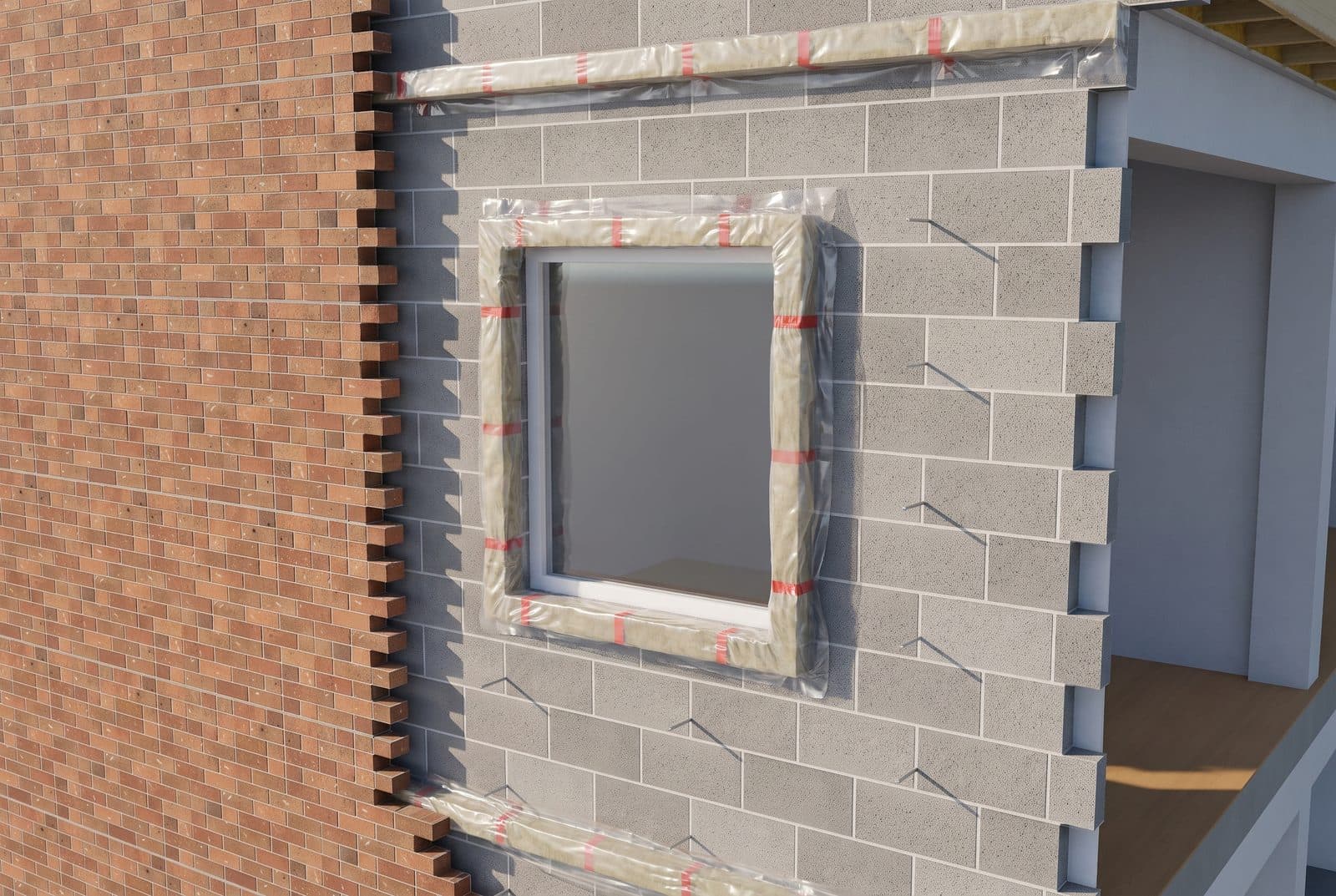
Cavity barriers are a key part of Krasi Fire Protection’s passive fire protection services, designed to control how fire and smoke move through the hidden voids and gaps within a building’s structure. They are installed in concealed spaces such as cavity walls, ceiling voids, roof spaces, and around openings so that these areas cannot act like chimneys, carrying flames and hot gases unseen from one part of the building to another. By breaking up these voids with correctly specified barriers, Krasi Fire Protection helps ensure that fire and smoke are contained, supporting the overall fire compartmentation strategy of the building.
Krasi Fire Protection’s cavity barrier service typically includes surveying existing cavities and facade build-ups, identifying where barriers are required by design, regulation, or good practice, and highlighting where existing barriers are missing, damaged, or incorrectly installed. We then supply and install cavity barrier systems—often based on mineral fibre and/or intumescent materials—that are tested to provide the required integrity and, where specified, insulation performance for a defined period. This careful design and installation work helps ensure barriers close or resist gaps when exposed to heat, restricting the movement of fire and smoke and contributing to safer evacuation and reduced structural damage.
Because cavity barriers must align with compartment lines, external wall details, and openings such as windows, doors, and service penetrations, Krasi Fire Protection coordinates their installation with other passive fire measures like fire stopping, fire barriers, and fire-resisting walls and floors. Correct positioning, fixing, and continuity are essential, so our teams pay close attention to junctions, edges, corners, and interfaces with other systems to avoid leaving unseen weak points. Over the life of a building, well-designed and maintained cavity barriers from Krasi Fire Protection help keep hidden voids under control, support compliance with building regulations, and play a vital role in the overall resilience of the structure in a fire.